Start with Flavour and Intensity
A useful beer and food pairing begins with the strength and character of both the dish and the glass. Compare the meal’s seasoning, cooking method, and most assertive ingredients with the beer’s aroma, flavour, and body. A beer should not automatically dominate a delicate dish, and a powerful dish should not make the beer disappear. Treat aroma, bitterness, sweetness, acidity, richness, and body as separate clues rather than relying on a style name alone. These comparisons help you make a practical choice while leaving room for personal preference.
Compare Overall Intensity
Start with the dish as a whole: a lightly seasoned preparation usually has less flavour intensity than food with concentrated seasoning, browned surfaces, or several assertive ingredients. Cooking method matters because steaming keeps flavours restrained, while searing or slow cooking can deepen savoury notes. A spoonful of sharp mustard or a concentrated sauce may also carry more weight than the main ingredient.
Compare that impression with the beer’s aroma, flavour, and body. A beer with prominent hop, malt, or fermentation aromas can be noticeable even when its body is light; a fuller, higher-alcohol beer may feel weightier. The aim is not to make both sides equally powerful in every respect, but to avoid letting one erase the other.
For a mild example, serve a softly seasoned omelet with a delicate, light-bodied helles: its restrained aroma leaves the eggs and fresh herbs perceptible. For a bold example, pair a slowly cooked mushroom and barley stew, with browned mushrooms and black pepper, with a malt-forward brown ale whose toasted aroma can meet the stew’s deeper flavour. These are starting points, not fixed rules; a more assertive seasoning or a stronger beer can shift the balance.
Assess Each Flavour Dimension
After judging overall intensity, compare individual beer flavor profiles with specific features of the food. A match on one dimension does not guarantee a match on another: a beer may have a gentle body but a sharp hop aroma, for example.
| Dimension | What to notice in beer | Food characteristic to balance or echo |
|---|---|---|
| Aroma | Citrus or floral hop notes in an American pale ale | Fresh herbs or citrus zest in a dish |
| Bitterness | Hop bitterness; many pale ales fall around 30–45 IBU, though recipes vary | Caramelized onion sweetness or a sweet glaze |
| Sweetness | Toffee-like malt character in a brown ale | Roasted squash or browned bread with gentle sweetness |
| Acidity | Tartness in a sour ale, which varies by beer | Pickled vegetables or a vinegar-based dressing |
| Richness | Full malt flavour and a rounded, lingering finish | Oiliness or a creamy sauce that can soften a firm finish |
| Body | Light, medium, or full weight on the palate | Delicate broth for a light body; dense puree for a fuller one |
Use the table to identify a likely point of connection or contrast, then consider whether the beer’s remaining features suit the dish. For instance, matching sweetness may work while pronounced bitterness feels too sharp; evaluate each dimension independently rather than treating one as a complete verdict.
Three Pairing Approaches
Complementary pairing, contrast, and matching intensity offer three practical ways to think about beer and food pairing. A toasted malt aroma can echo roasted ingredients, while lively carbonation can refresh the palate after a rich bite. Matching intensity focuses instead on keeping the beer’s body and flavor strength in proportion to the dish. These approaches are flexible, not fixed rules: a single meal may invite more than one, and the best choice depends on which feature you want to bring forward.
Complementary Pairings
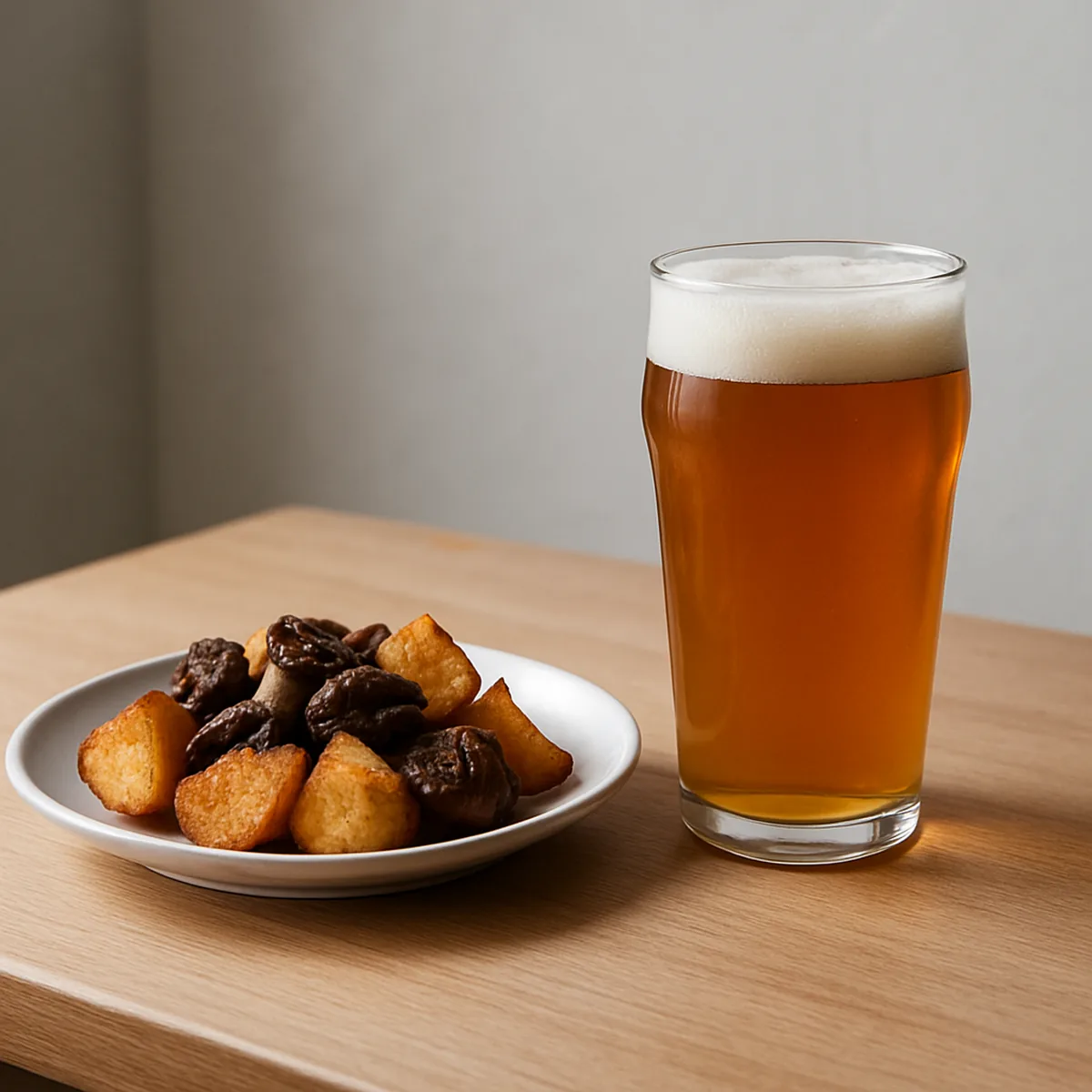
A complementary pairing brings similar flavors or aromas together, creating a clear thread between the beer and the food. The match might come from toasted, roasted, nutty, fruity, or herbal notes; the two do not need to taste identical. Instead, one shared quality makes the combination feel coherent while each element remains recognizable.
For example, roasted mushrooms can work well with a brown ale whose malt profile includes toasted or lightly nutty notes. The mushroom’s browned edges echo the beer’s malt character, while its savory center gives that aroma something substantial to meet. This is a useful approach when a dish already has a distinct flavor you want the beer to underline rather than redirect.
Shared flavors can also become too dominant if both sides are intense. A heavily roasted ingredient alongside a beer with forceful charred or bitter notes may make the overall impression seem dry and one-dimensional. Look for a recognizable echo, such as gentle toast in both the mushrooms and the ale, and let other details—like the dish’s salt or the beer’s fruitiness—add separation. Complementary pairings suit dishes whose defining aroma is appealing on its own and gains depth from a related beer note.
Contrasting Pairings
Contrasting pairings bring different qualities together so that one can offset or refresh the other. The aim is not to cancel either flavor; it is to make the contrast feel balanced, with enough difference to keep each bite and sip distinct. Carbonation against richness and bitterness against sweetness are two useful combinations to consider.
A crisp, highly carbonated lager alongside creamy potato gratin offers a simple example. Bubbles and a clean finish can refresh the palate between rich, smooth bites, while the gratin keeps the beer from seeming too lean. The pairing works best when the beer’s bitterness stays moderate and its carbonation is noticeable without making the dish taste dull or harsh.
Bitterness can also provide contrast to a sweet element, but the levels need care: a mildly sweet malt character alongside moderate hop bitterness can feel balanced, whereas pronounced bitterness may make sweetness seem cloying or abrupt. Consider the aftertaste as well as the first impression. If the food leaves a coating richness, refreshing carbonation may be more useful; if it has a clear sweet note, measured bitterness may add definition. Choose the contrast that addresses the dish’s most persistent quality, then check that the beer still has enough flavor to stand beside it.
Matching Intensity
Matching intensity means keeping the beer’s strength of flavor and body in proportion to the dish, so neither overwhelms the other. Use these practical cues to estimate the balance before choosing a pour:
- Seasoning: Heavily seasoned food can stand up to a more expressive beer; a delicately seasoned dish is easier to appreciate with restrained flavor.
- Richness: A buttery or dense dish can meet a beer with fuller body, while a light preparation may be overshadowed by a heavy, assertive pour.
- Cooking intensity: Slow-browned or deeply caramelized food has stronger flavors than gently cooked ingredients and can support more pronounced malt character.
- Beer body: Consider how the beer feels on the palate, not just its color; a full-bodied beer can dominate a fine-textured dish.
- Flavor concentration: A concentrated sauce or glaze adds weight to a plate, so account for it alongside the main ingredient when gauging the match.
For example, a hearty beef casserole with concentrated gravy can pair with a full-bodied brown ale, while the same ale may drown out a lightly seasoned vegetable broth. These cues are guides rather than a scoring system: a dish may be rich but mild, or lightly textured yet strongly seasoned. Start with the quality that makes the food most forceful, then select a beer with enough body and flavor to meet it without taking over. When no single feature dominates, matching overall intensity is a dependable starting approach.
Pairing by Beer Style
Beer and food pairing becomes easier when you look beyond a style name and consider aroma, bitterness, malt character, and body. A hop-forward ale can bring citrus or herbal notes, while a malt-led beer may echo toast or caramel in a dish. Lighter-bodied beers often leave delicate flavours more distinct than a fuller, more assertive pour would. Recipes differ, so use these style cues as starting points rather than guarantees.
Hop-Forward Beers
Hop-forward beers can carry citrus, pine, floral, or herbal aromas, with bitterness that ranges from crisp to pronounced. Those qualities may suit assertively seasoned foods: citrusy hops can echo a lemon or herb accent, while a firm bitter finish may keep an oily or fatty coating from lingering. A sweeter glaze can soften the impression of bitterness, though a very bitter beer may make sharp heat or pepper seem more intense.
The figures below are indicative bitterness ranges in the BJCP style guidelines, not a prediction of how a particular beer will taste. Check the actual beer’s aroma and finish as well as its style label.
| Beer profile | Indicative bitterness | Food characteristic and possible effect |
|---|---|---|
| American IPA | 40–70 IBU | Citrus or pine aromas may complement pepper, herbs, or a tangy seasoning; bitterness may offset an oily coating. |
| English IPA | 40–60 IBU | Earthy or floral hop notes can sit comfortably beside savoury seasoning without adding a strong citrus accent. |
| Double IPA | 60–100 IBU | High hop intensity may stand up to a sweet, assertive glaze, but can dominate a lightly seasoned dish. |
Hop variety, freshness, malt sweetness, and fermentation all change the balance; two beers with similar IBU figures can taste quite different. For a moderately seasoned dish, a pale ale or less bitter IPA may preserve more of the food’s detail than a high-intensity Double IPA. Taste a small sip with a bite, noting whether the hop aroma connects with the seasoning or the finish overwhelms it.
Malt-Forward Beers
Malt-forward beers bring flavours such as bread crust, biscuit, caramel, toffee, or roast. These notes may connect with browned surfaces and savoury seasoning: an amber ale can work with grilled onions or a browned sausage, while a brown ale may echo the toastiness of roasted mushrooms. The match depends on the beer’s sweetness and roast level; a dry, lightly toasted malt profile is less likely to make a savoury dish seem sugary.
Caramel malt can complement a modestly sweet glaze or roasted root vegetables, especially when the dish also has a browned, savoury edge. If both the beer and food are distinctly sweet, the combination can feel heavy, so a drier amber lager may be a better fit than a sweet, strong ale. Conversely, a small amount of caramel character can round the sharp edge of a salty or smoky bite.
Roastier examples need a different approach. A porter with restrained roast may suit charred vegetables or a savoury filling, while a strongly roasted stout can overwhelm mild seasoning and make delicate flavours seem faint. Richness matters too: a full-bodied, sweet malt profile can add weight to an already substantial dish, whereas a drier beer with moderate roast can provide a less cloying contrast. Compare the first impression, mid-palate, and finish; the best choice is the one whose malt intensity meets the browned or savoury elements without masking them.
Lighter-Bodied Styles
A lighter-bodied beer can suit food with gentle seasoning and a fine texture because it is less likely to cover subtle aromas or leave a heavy finish. A clean lager, kölsch, or restrained wheat beer may work with poached chicken, steamed white fish, fresh vegetables, or a mild fresh cheese. These are starting points: wheat beers can carry noticeable fruit or spice aromas, and a crisp lager may still have a firm hop finish.
Compare the beer’s flavour intensity, not just its body. A light lager with assertive bitterness could compete with a delicately seasoned fish, while a slightly fuller but soft malt profile may sit more quietly beside it. For a dish with lemon, herbs, or a light sauce, a beer with a compatible citrus or floral note can add definition; a highly aromatic hop beer may instead take over.
Choose a lighter-bodied option when the food’s appeal rests on delicate texture, mild seasoning, or a clean finish. A pale lager may be preferable to a roasted porter beside fresh vegetables because it adds less roast and sweetness; the porter could be a better choice for a dish with deeper browned flavours. Likewise, a subdued wheat beer can accompany mild poultry, while a strongly aromatic version may compete with herbs. Individual recipes vary in carbonation, sweetness, and aroma, so assess the actual pour rather than assuming every beer in a named style will be subtle.
Pairing by Dish
A dish’s cooking method and texture can matter as much as its main ingredient when choosing a beer. Char, chili heat, fat, and dessert sweetness each affect how bitterness, carbonation, malt sweetness, and roasted notes come through. Use these practical beer pairing examples as starting points, then adjust for the dish’s seasoning and the beer’s flavor intensity. The best match is the one that keeps both the food and the beer distinct and enjoyable.
Grilled Foods
Grilling creates browned edges and, over direct flame, smoky or lightly bitter notes. A malt-forward amber ale can echo the toasted surface of grilled eggplant, corn, or chicken without making the food taste sweeter than it is. For beef or pork with a pronounced char, a darker beer with restrained roast can complement those browned flavors; a highly roasted beer may overwhelm a delicate vegetable or simply seasoned fish.
Consider the dish’s richness as well as its char. Carbonation in a crisp pale ale or lager can refresh the palate between bites of a fatty burger, while moderate hop bitterness can keep the pairing from feeling heavy. With lean grilled vegetables or chicken, a lighter-bodied beer often preserves their finer flavors better than a dense, strongly roasted option.
For beer and barbecue pairing, account for the sauce: a sweet, smoky glaze can make a very bitter beer seem harsher, while a dry rub leaves more room for roasted malt. Match the beer’s intensity to the amount of char, sauce, and fat rather than treating every grilled dish alike.
Spicy Dishes
Chili heat changes how beer tastes: strong bitterness and high carbonation can make the prickling sensation seem sharper, while a touch of malt sweetness and a fuller body may soften the impression. When choosing the best beer for spicy food, consider the heat level alongside the sauce’s sweetness, acidity, and fat.
- For a dish with fresh jalapeno, choose modest bitterness; a strongly bitter beer may make the pepper’s heat feel more persistent.
- With chili oil or spicy fried food, lively carbonation can refresh between bites, though an aggressively fizzy beer may add to the tingling sensation.
- A slightly sweet malt profile can temper heat in a chili-glazed dish, especially when the glaze is not already heavily sweetened.
- For spicy curry with coconut milk, a fuller-bodied beer can stand up to the sauce; keep alcohol and bitterness moderate to avoid adding sharpness.
- When salsa or a tomato-based sauce brings noticeable acidity, avoid relying on sweetness alone; a balanced, easy-drinking beer may leave the flavors clearer.
A lightly sweet, low-bitterness beer may suit spicy tacos with salsa, but the result depends on pepper strength and toppings. Try a small pour with one bite before choosing a full serving.
Rich Foods
Rich foods leave a lingering coating of fat or cream, so carbonation can provide a refreshing contrast between bites. A crisp, moderately bitter beer may feel especially effective with fried chicken, creamy pasta, or pork belly because its bubbles and hop edge refresh the palate. This is a contrast pairing: the beer does not need to share the dish’s richness to work alongside it.
A complementary approach uses malt and roasted flavors with foods that have browned or savory depth. A malt-forward brown ale can accompany a beef stew or a mushroom pie, while a beer with restrained roast may echo the browned crust of a baked dish. Keep roast intensity in proportion; a strongly bitter or deeply roasted beer can dominate a mild cream sauce.
Acidity also offers a refreshing counterpoint, particularly when a rich dish includes cheese, butter, or a creamy dressing. For example, a bright, tart beer can lift the richness of a cheese-topped savory tart, while a softer malt-led beer creates a rounder match. These approaches to food pairing with beer are adaptable: use contrast for a palate-cleansing effect or complementary malt when the dish has toasted, savory flavors.
Desserts
For matching beer with desserts, compare sweetness before choosing a style. A dessert that tastes much sweeter than the beer can make the beer seem thin, dry, or more bitter. A beer with some perceived malt sweetness is often a better fit for a sweet dish, but its intensity should also suit the dessert: delicate fruit or custard can be overwhelmed by a forceful, roasted beer.
Chocolate desserts offer room for roasted notes. A moderately sweet porter or stout may complement the cocoa character of chocolate cake or brownies, while a very bitter, strongly roasted beer can accentuate bitterness in dark chocolate. With milk chocolate or a sweeter chocolate dessert, a rounder malt profile may feel more balanced than a dry, highly hopped beer.
Caramel-like desserts, such as a caramel tart or bread pudding with caramel sauce, can work with beers that suggest toast, biscuit, or caramel malt. Choose a beer no less intense than a richly flavored dessert, but avoid matching a very sweet beer to an already sugary dish if the result feels cloying. Small tastes of dessert and beer together reveal whether sweetness, roast, or bitterness is leading.
Adjust and Taste
A pairing can taste different together than it does when each part is sampled alone. A short, repeatable tasting makes it easier to identify which beer quality changes the dish’s flavor or finish. Small pours and deliberate bites help keep comparisons clear, especially when testing more than one option. Use the result to guide your next choice rather than treating any pairing as a fixed rule.
Follow a Tasting Sequence
Use the same sequence whenever you test a beer pairing: first identify the dish’s strongest features, then assess how the beer changes them. A few notes on flavor and finish make the comparison easier to repeat.
- Consider the dish before pouring: note its dominant taste, aroma, texture, and lingering finish, such as salt, smoke, creaminess, or acidity.
- Choose one beer quality to connect with or offset the dish; a toasted note may echo browned flavors, while crisp acidity can counter creaminess.
- Take a small bite of the dish by itself and notice its first impact, mid-palate, and aftertaste before adding another flavor.
- Taste a modest beer sample, about 3–4 ounces, at its intended serving temperature; identify whether bitterness, sweetness, roast, acidity, carbonation, or body leads.
- Take another bite, then a small sip while the food’s flavor remains; observe whether the beer refreshes, amplifies, softens, or masks that flavor.
- Repeat once, reversing the order to beer then food, and assess the combined finish; note the dominant sensation and whether you want more or less of it.
Compare your notes on the separate tastes with the combined finish, since a beer can seem balanced alone but become sharper beside food. Keep the next pour small so any adjustment is easy to judge.
Adjust to Your Preference
Let the combined finish guide the next choice. If bitterness dominates after a sip, try a beer with less assertive bitterness or more malt sweetness; if sweetness lingers, choose a drier, crisper profile. Make one change at a time so the effect is clear rather than shifting bitterness and sweetness together.
When aroma overwhelms the dish, move toward a subtler aroma profile; when the beer seems muted, select one with a more noticeable aroma. If acidity feels too sharp, reduce it in the next beer; if the pairing tastes flat, a brighter acidic character may add definition. Judge the result by whether the food’s own flavors remain recognizable.
For a rich or fatty mouthfeel, a beer with more carbonation or a lighter body can feel cleaner between bites. If the beer feels thin beside the dish, choose more body. These adjustments concern texture: keep the flavor profile steady when testing body or carbonation, then decide whether that single change improves the balance.
A complementary choice repeats a quality already present, such as a sweet note alongside sweetness; a contrasting choice introduces an opposing quality, such as crispness against richness. Compare the two approaches in separate small pours. Choose the one that leaves both the food and beer distinct, with no single sensation lingering longer than you enjoy.