Beer Families: Ales and Lagers
Ale and lager are broad beer families, not single recipes or guaranteed flavor profiles. The distinction mainly reflects the yeast and fermentation approach used to make the beer. On a menu, a family label can help you orient yourself, but it does not tell you exactly how a particular glass will taste. Look for the named style and the brewery’s description when you want more detail about a beer’s character.
Ale
Ale is a broad fermentation family usually made with strains of Saccharomyces cerevisiae, commonly called ale yeast. These yeasts are often described as top-fermenting because they tend to work actively in the upper part of the fermenting beer, though modern tanks and yeast behavior make that label a useful shorthand rather than a literal rule. Ale fermentation is generally conducted warmer than lager fermentation, without one fixed temperature applying to every recipe.
The family includes many different recipes, so “ale” alone does not specify a beer’s color, bitterness, or strength. An ale may be pale or dark, gently bitter or strongly bitter, and lower or higher in alcohol. Those qualities depend on the recipe and brewing choices, including the grain bill, hop additions, yeast strain, and fermentation management. The family name identifies a broad fermentation tradition, not a complete flavor profile.
When a label says “ale,” treat it as a starting point rather than a tasting prediction. Check the named style and any description of the beer’s malt, hop, or fermentation character to narrow down what to expect. For a practical ale vs. lager comparison, use the family to identify the fermentation approach, then rely on the specific style name for a closer guide to the glass.
Lager
Lager is a broad fermentation family usually made with Saccharomyces pastorianus, a lager yeast associated with bottom fermentation. The term describes a common yeast and fermentation pattern: the yeast tends to settle as fermentation progresses, and lager beers are often given a period of cool maturation. Exact temperatures and schedules vary with the strain, recipe, equipment, and brewery, so no single setting or duration defines every lager.
Lager is a family, not a promise of one flavor profile. Its members can differ in color, bitterness, body, and strength according to their ingredients and brewing choices. The yeast and fermentation approach distinguish the family, while grain selection, hop use, and recipe design shape the beer’s particular character. A lager label alone therefore cannot tell you whether the beer will be pale or dark, mild or bitter, or relatively light or strong.
For a useful lager comparison, read the specific style name and brewery description rather than assuming every lager tastes alike. The family name gives you a broad clue about fermentation; details such as stated bitterness, color, or strength provide more direct guidance when choosing a beer. This approach works best when you want to compare two bottles without treating “lager” as a flavor description.
Hop-Forward Styles
Pale ale and India pale ale are related styles with hop character, but they are not interchangeable names. In both, hops can contribute aroma and bitterness, while malt helps shape the beer’s balance and body. Individual recipes and brewing choices produce noticeable differences in colour, aroma, and how bitter a beer seems. Knowing these distinctions can help you narrow down which hop-forward beer suits your preferences.
Pale ale
Pale ale is a broad ale style family that includes beers with a balance of malt character and noticeable hops. It is related to India pale ale, but the names describe distinct families: pale ale does not automatically mean the stronger hop emphasis commonly associated with an IPA. A pale malt base may bring bread, biscuit, or light caramel notes, while hops add bitterness and aromas that range from herbal to citrus-like.
There is no single colour or body shared by every pale ale. Some pour golden or copper, while others look deeper amber; the malt bill and brewing choices influence both shade and fullness. Hop varieties and when they are added also shape the aroma. A beer with a pronounced hop scent may still taste relatively balanced, while another pale ale may have a sharper, more persistent bitterness.
When choosing one, consider the description on the label alongside its colour and listed ingredients: malt-forward versions tend to feel rounder, while hop-led examples make those aromas more prominent. Treat pale ale as a starting point, then compare the aroma and bitterness of individual beers rather than assuming every example tastes alike.
India pale ale
India pale ale, usually shortened to IPA, is a style family rather than a synonym for all craft beer. Hops can lead its aroma and flavour, but the balance, colour, and body vary from one IPA to another. These differences reflect choices such as hop varieties, malt bill, and whether hops are added late in the boil or during dry hopping.
- Citrus-forward hops can suggest grapefruit, orange, or lemon, with the intensity ranging from a fresh aroma to a more pronounced flavour.
- Floral hop notes may evoke blossoms or light perfume, adding aromatic lift without requiring a beer to taste sharply bitter.
- Pine and resin aromas can create a distinctive, sometimes firm impression; their prominence depends on the hop blend and overall recipe.
- Herbal or grassy notes may bring a leafy character, while malt can soften their edges or let them stand out.
- Fruit-like aromas can recall tropical fruit or berries, and may appear alongside citrus, floral, or resinous notes in one beer.
Bitterness is not uniform across the family: two IPAs can differ in how sharp, lingering, or restrained their bitterness seems. Colour ranges from pale gold to deeper amber, and body can feel light or fuller depending partly on the malt bill. For a first comparison, check the stated hop or flavour notes and choose the aroma profile that appeals to you; a strongly aromatic IPA does not necessarily taste equally bitter.
Dark Beer Styles
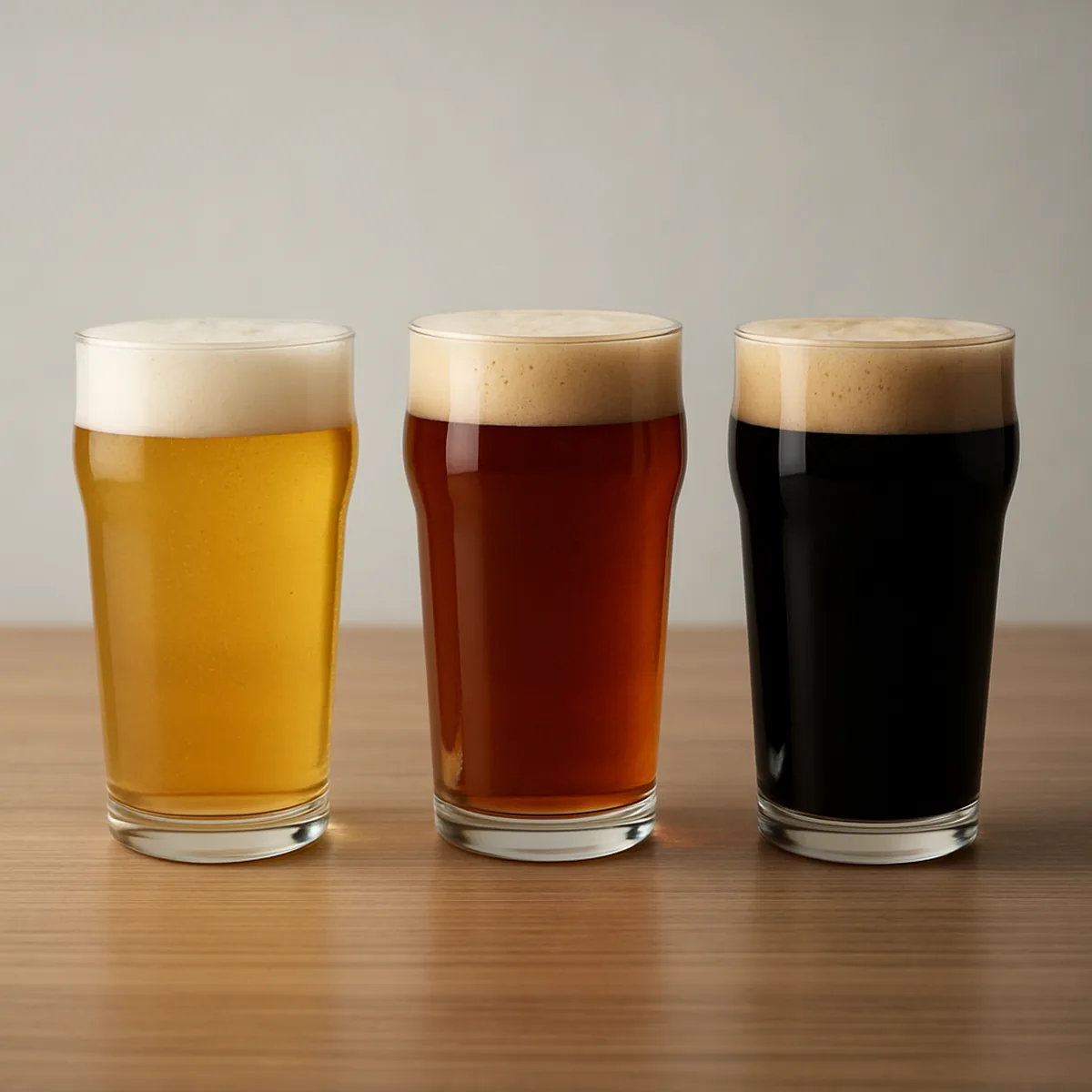
Stout and porter are separate style names with a long history of overlap, and both can show deep brown to nearly black colour. Their flavour profiles may include roasted grain, toast, cocoa, or coffee-like notes, but recipes and results vary by brewery. A dark appearance is a visual cue, not a reliable measure of sweetness or alcohol strength. Reading the style name alongside the tasting notes and alcohol-by-volume figure gives you a clearer idea of what is in the glass.
Stout
Stout is a distinct beer style commonly associated with roasted grain, toasted flavours, and coffee-like aromas. Those impressions can come from darkly kilned or roasted malts; in dry stout, roasted unmalted barley is also a familiar ingredient. The name covers varied recipes, however, so one stout may emphasize dry roast while another leans toward cocoa, caramel, or a smoother grain character.
Examples illustrate that range without defining every stout: oatmeal stout uses oats for a fuller texture, while milk stout is traditionally made with lactose, which can add sweetness and body. A roast-forward description does not guarantee a bitter finish, and a sweeter impression does not identify the beer’s alcohol level. Colour is similarly limited: a nearly black pour can be relatively dry, while sweetness and strength depend on the recipe and fermentation, not appearance alone.
When choosing a stout, look beyond its dark colour to the label’s tasting notes and stated ABV. If you prefer a drier profile, seek words such as “dry” or “roasted”; for a rounder impression, notes such as “oatmeal” or “sweet” may help. Your most practical guide is the specific product description, since stout is a style name rather than a promise of one fixed flavour or strength.
Porter
Porter is a distinct style name with historical and flavour associations that overlap with stout. In the 18th century, “stout” could describe a stronger porter; today, the names identify separate styles, though brewers and drinkers may still notice similarities. Porters can bring roasted or toasted grain notes, sometimes with hints of cocoa or coffee, but the balance varies across recipes and examples.
Some porters emphasize a lighter toast character, while others use darker malts for more pronounced roast or chocolate-like notes. Those descriptions are possibilities, not a fixed ingredient list: a porter’s recipe may differ substantially from another porter’s. Dark brown or black colour also cannot tell you whether the beer will taste sweet, finish dry, or have a higher ABV. Sweetness and strength are separate characteristics, so use the tasting description and the alcohol figure on the label rather than relying on appearance.
For a practical choice, compare the wording on two porter labels: “toasted” or “roasty” points toward grain-led flavours, while a stated ABV gives you the relevant strength information. If you want a milder impression, select by the described flavour and listed alcohol level instead of assuming every dark porter is strong or sweet. Treat porter as its own style, while allowing for its shared history and flavour territory with stout.
Wheat Beer and Other Grain Styles
Grain choices shape a beer’s appearance, body, and flavor, but the result depends on the recipe and brewing process. Wheat is one familiar option, while other grains can be used to adjust a beer’s texture or to replace part of its customary grain bill. You can use these ingredients as clues when comparing types of beer, rather than assuming one grain guarantees a particular taste. The descriptions below outline common possibilities.
Wheat beer
Wheat beer is brewed with wheat alongside other brewing grains, commonly malted barley; it is not made exclusively from wheat. The wheat may be malted or unmalted, and its proportion and treatment vary among recipes. Those choices, along with the brewing process, influence how the finished beer looks and feels.
Wheat’s proteins can contribute to a persistent head and a hazy appearance, but neither feature is guaranteed. Filtration, grain preparation, and other recipe choices can produce a clearer pour or a different foam. The body may feel soft and rounded, or relatively light, depending on the grain bill and fermentation. Wheat can lend a mild grain-like, bready, or cereal impression, while yeast and other ingredients may add distinct fruit-like or spicy notes. These are possible beer flavor profiles, not fixed rules for every wheat beer.
When comparing labels, look beyond the word “wheat”: check whether the beer is described as filtered or unfiltered and note any listed ingredients. Those details can give you a better sense of its likely appearance and texture than the grain name alone. If you want to try wheat beer, choose a bottle or draft described with the qualities you prefer, such as a soft body or a clearer finish.
Other grain-based variations
Brewers may add grains besides wheat to a recipe, using them alongside malted barley or to replace part of its share. Their effects depend on the grain’s form and amount.
- Oats: Flaked or malted oats can contribute a fuller, softer texture; the amount and mash process affect how noticeable that quality becomes.
- Rye: Rye malt or flakes may bring a dry, grainy impression and a distinctive pepper-like note, though the recipe can make these traits subtle.
- Corn: Corn can lighten body and contribute a mild sweetness; its flavor may remain restrained when used as part of a larger grain bill.
- Rice: Rice is often used to make a lighter-bodied beer with a relatively delicate grain character, depending on the quantity and brewing method.
- Sorghum: Sorghum can serve as a brewing grain in recipes that use less barley malt, with its flavor varying by product and process.
- Millet: Millet may be malted or used in other forms; its contribution to body and flavor depends on preparation and its share of the recipe.
A grain’s name alone does not predict the final result: malted, flaked, and raw forms behave differently in the mash. When you compare labels, ingredient details can help explain why two beers with similar color have different body or grain character.
How to Read a Beer Style Name
A beer style name gives you a quick way to anticipate a beer’s character, but it is not a complete specification. Brewers can interpret the same name differently while staying within its familiar boundaries. Ingredients, recipe choices, and brewing methods can shift aroma, bitterness, body, and colour. Compare the details on the label or menu with what is actually in your glass.
Style names and variation
A style name is a useful starting point, not a promise that every beer will taste or look alike. For example, the BJCP 2021 guidelines give American Pale Ale a bitterness range of 30–50 IBU and a colour range of 5–10 SRM. Those boundaries leave room for different hop choices, malt balance, and finishing gravity, so two beers with the same name may feel noticeably different.
| Feature | Possible expression | Useful reference |
|---|---|---|
| Aroma | Citrus peel, pine, floral, or stone-fruit hop notes | Hop varieties and timing shape the aroma |
| Bitterness | Firm and lingering, or more balanced by malt | 30–50 IBU in BJCP 2021 |
| Body | Light and crisp, or rounder with more malt weight | 4.5–6.2% ABV in BJCP 2021 |
| Colour | Gold through copper | 5–10 SRM in BJCP 2021 |
These ranges describe a style’s typical parameters, not a sensory score or a guarantee for each bottle. IBU estimates bitterness, while colour in SRM describes appearance; neither number tells you the full beer flavor profile. A beer near the low end of the bitterness range may still seem sharp if its malt sweetness is restrained, while a more malt-forward example can feel rounder.
When you compare options, read the brewery’s tasting description for specific clues such as citrus, toasted malt, or a dry finish, then check the beer’s colour and aroma yourself. Treat the name as a first filter and the description and beer as the deciding details; that is the practical way to choose a beer that suits your preferences.